Starting a Garment Decoration Business: When Does Outsourcing Make Sense?
Guest post by Lara Uschakow: When to produce in-house and when to work with partners – lessons from DTF, embroidery digitizing, production volume and expertise.
In the first part of this series, I shared why I decided to invest in an embroidery machine. In the second part, I wrote about the mistakes I made when getting started, and in the third part, I explained how I prepare for larger embroidery orders.
In this fourth part, I want to explore a question I keep coming back to: As a garment decorator, do I really need to master every step and handle everything in-house?
When I started, I was very ambitious. I wanted to learn as many decoration techniques as possible, understand the equipment, and do as much as I could myself. But every new capability brought more work with it. Another machine also means training, maintenance, material planning, and responsibility for another production process.
Over time, I have learned to be more deliberate about what we do ourselves and where a specialist partner can support us.
DTF: Why we initially bought our transfers from a supplier
DTF was one of our first examples of this. We bought our transfers from an external supplier for a long time, even though we liked the idea of eventually producing them ourselves.
DTF transfers carry printed designs that are then applied to garments using a heat press. This means you can offer DTF decoration without printing the transfers yourself.
That made sense for us at the beginning. We did not have the production volume or the expertise to justify our own setup. Buying transfers allowed us to add DTF to our services, fulfil orders, and gain experience.
We only decided to invest in our own production once it became clear that DTF would be an important part of our core business in the long term. Demand and the role of DTF in our company guided that decision.
Purchase price alone does not tell the whole story
When considering outsourcing, it is easy to focus on price first: What does it cost to buy this service, and what would it cost to produce it ourselves?
These days, I include much more in that calculation. A transfer that appears cheaper to print ourselves is not much of a saving if the machine sits idle most of the time or takes up hours that are urgently needed elsewhere in the business.
These are the questions I find useful:
- Production volume: How regularly do we actually need this service?
- Investment: What will the equipment, accessories, software, and materials cost?
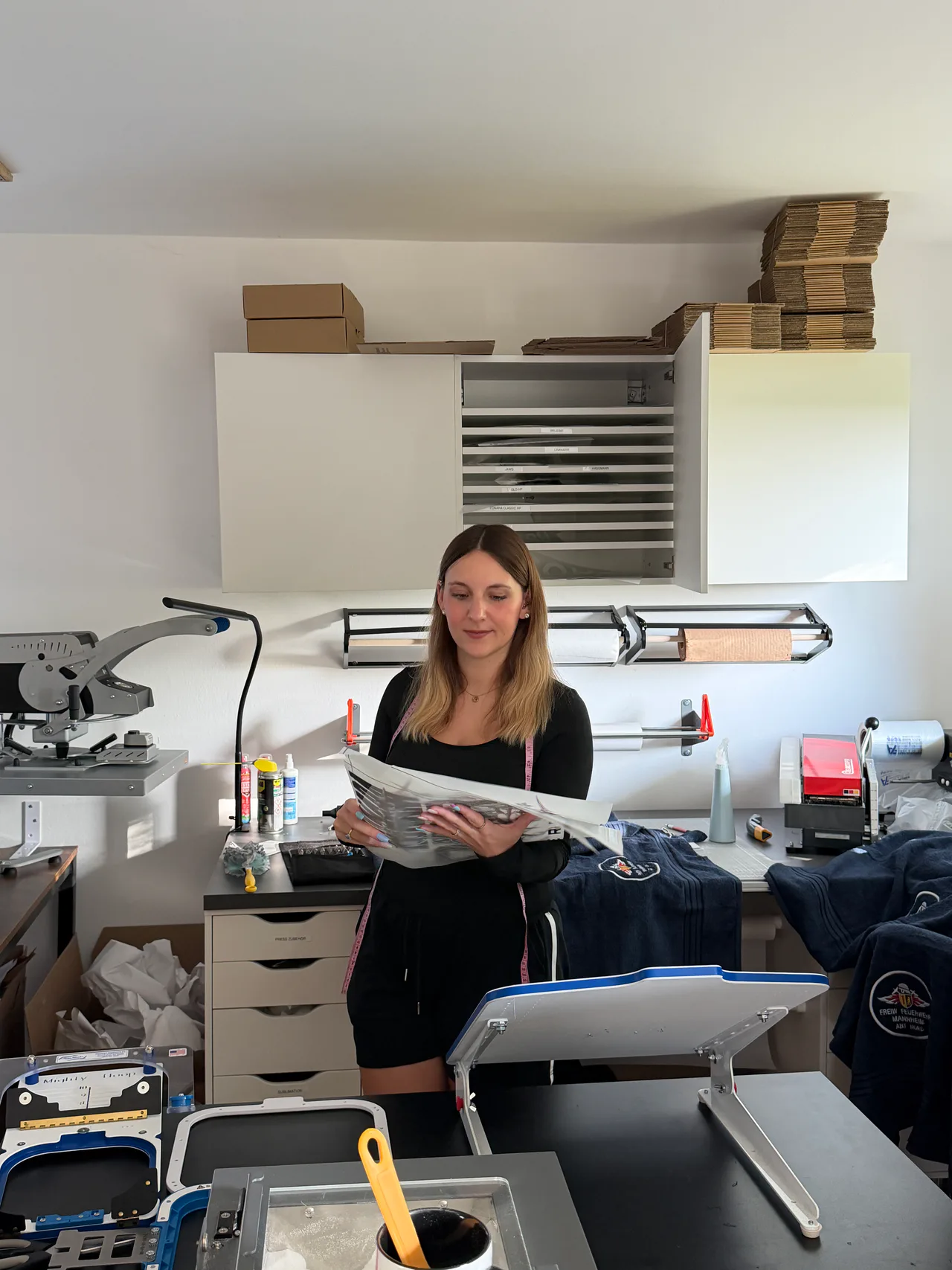
- Time and staffing: Who will handle production, preparation, and maintenance?
- Expertise: Can we run the process reliably and solve problems ourselves?
- Core business: How important is this area to the company in the long term?
- Speed: How often do we need to respond at short notice?
That last question can make a real difference. If you constantly need transfers at short notice, in-house production may be an advantage. If you only need them occasionally, working with a reliable supplier may be much more efficient.
The partnership also needs to work in practice. Lead times, quality, and clear communication matter just as much to me as the price.
Buying the machine is where the work begins
Owning a machine does not automatically save time. That is easy to underestimate when you are excited about new equipment.
You need to know how to operate it, identify and resolve faults, carry out maintenance, and keep materials in stock. You also need to keep learning about the process. The expertise does not arrive with the machine.
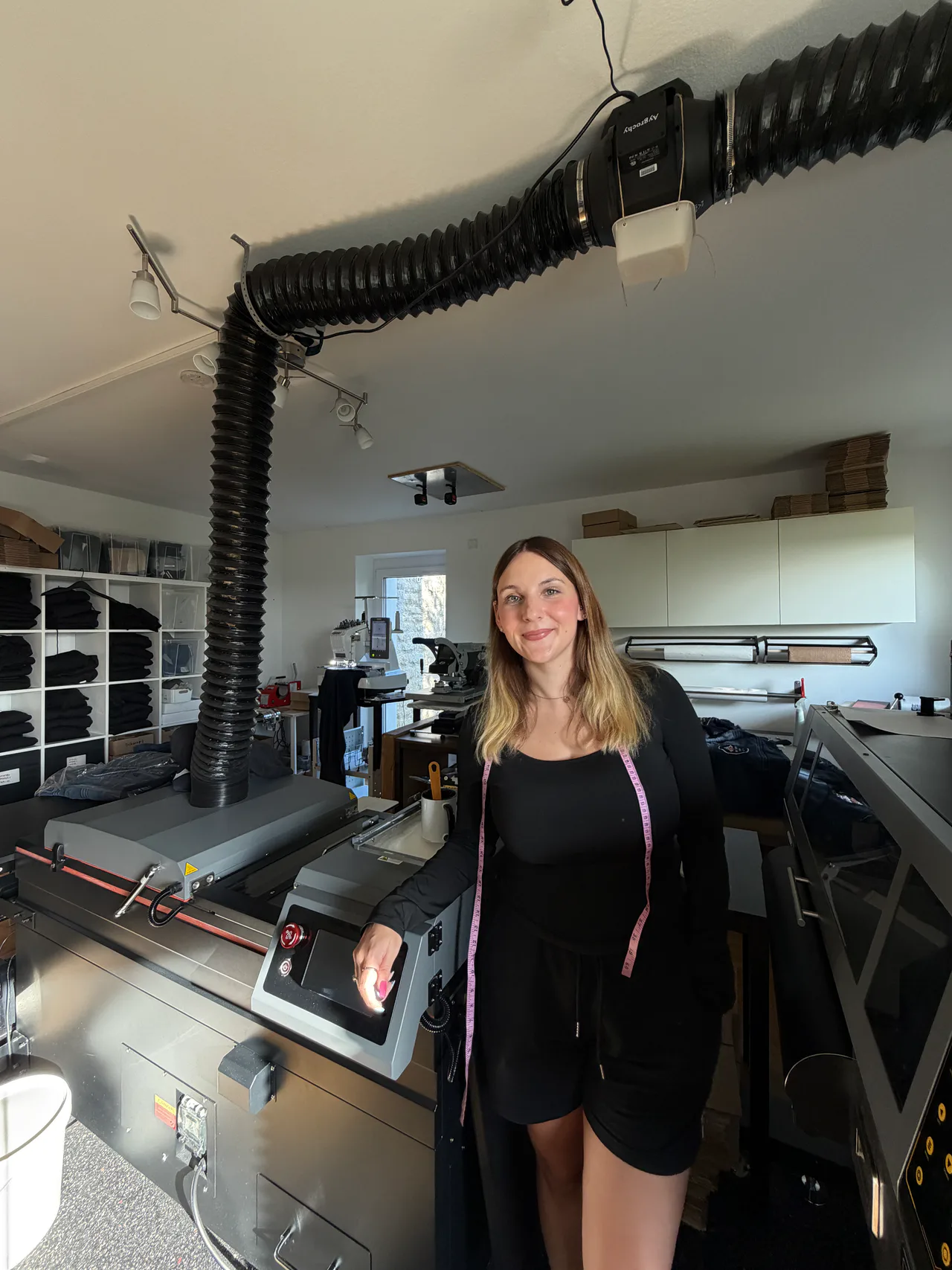
DTF makes this particularly clear. White ink, printheads, maintenance, RIP software for preparing print jobs, and colour management are all part of the work. Keeping production reasonably regular also needs to fit into your schedule.
For occasional orders, that commitment can be disproportionate. When the conditions are right, however, in-house production has clear advantages: We have more control, can respond faster, and depend less on external delivery times. With sufficient production volume, it can also make financial sense.
For me, the question is whether we can support the entire process over the long term.
This experience also shaped DTF Chef
Our experience of buying transfers is one of the ideas behind DTF Chef.
We want to help other garment decorators offer DTF and expand their range without immediately building a complete production setup with a printer, curing equipment, software, and the expertise to run it.
We are developing our new offering at www.dtf-chef.de, where we plan to make our DTF transfers available soon – coming soon.
For me, this offers the same opportunity that helped us in the beginning: start with a partner, gain experience, and find out how important a technique becomes to your business.
In embroidery, digitising is a specialist skill
Embroidery raises the same question for me, but at the level of an individual production step.
In the second part of this series, I described how much I had to learn while digitising my own embroidery designs. That experience was valuable. I still want a solid understanding of the basics so I can assess designs, advise customers, and recognise potential problems.
At the same time, I have realised how much expertise professional embroidery digitising requires. Stitch types, sequencing, density, and the way a design behaves on different fabrics all need to work together. Building that knowledge takes time. So does creating, testing, and refining files alongside day-to-day production.
If someone who digitises every day can create a file faster and better, spending several hours of my own time on it is not automatically the more economical choice.
This is where a service such as emborado’s embroidery digitising service can be useful. The embroidery production stays in-house, while specialists prepare the embroidery file.
My own understanding still matters. I need to explain the intended result, specify the garment or fabric, and judge whether the stitched sample meets the required standard.
Outsourcing leaves room to keep learning
For me, outsourcing does not mean giving up on learning. Especially in the early stages, good partners can create the space you need to develop your business.
You do not have to learn every technique, software package, and production process at once. You can offer a service through a partner first, gain experience with customer orders, and see how demand develops.
If you later need that service regularly and the investment makes sense, you can still bring it in-house. That is what happened with DTF in our business.
Equally, it may make sense to keep outsourcing a specialist step over the long term. What matters to me is whether the arrangement fits our daily work and helps us deliver reliable quality.
How my perspective has changed
Over time, I have learned that doing everything yourself does not automatically make you a better or more professional garment decorator.
Understanding the basics still matters to me. I want to judge what is possible and whether the quality is right. But I now make more deliberate decisions about where we develop our own expertise and which tasks we entrust to good partners.
My advice to anyone starting out is this: When considering a new technique, look at the whole process and the role you want it to play in your business.
You can build a broad range of services with the help of partners. And when an area grows large enough, bringing production in-house can become the next sensible step.
About Lara, laricari.studio, and Textilstätte
Under the name laricari.studio, I document my journey into self-employment and the development of my garment decoration and merchandise business. I share decisions, lessons learned, things that did not work out, and everyday life while building a company.
I offer my services through Textilstätte. Together with my partner, we provide custom garment decoration, including DTF printing, embroidery, sublimation, and heat-transfer vinyl. We also build online shops and fulfilment systems for creators, brands, and businesses, covering everything from technical setup and production to order processing and shipping.
Want to follow my journey?
- laricari.studio on Instagram, TikTok, and YouTube
- Textilstätte on Instagram and at textilstaette.de
- Enquiries: anfragen@textilstaette.de