Starting a textile finishing business: Why I chose an embroidery machine
Guest post by Lara Uschakow: Why embroidery became the next step in building a textile finishing business and what mattered when choosing a machine, advice and software.
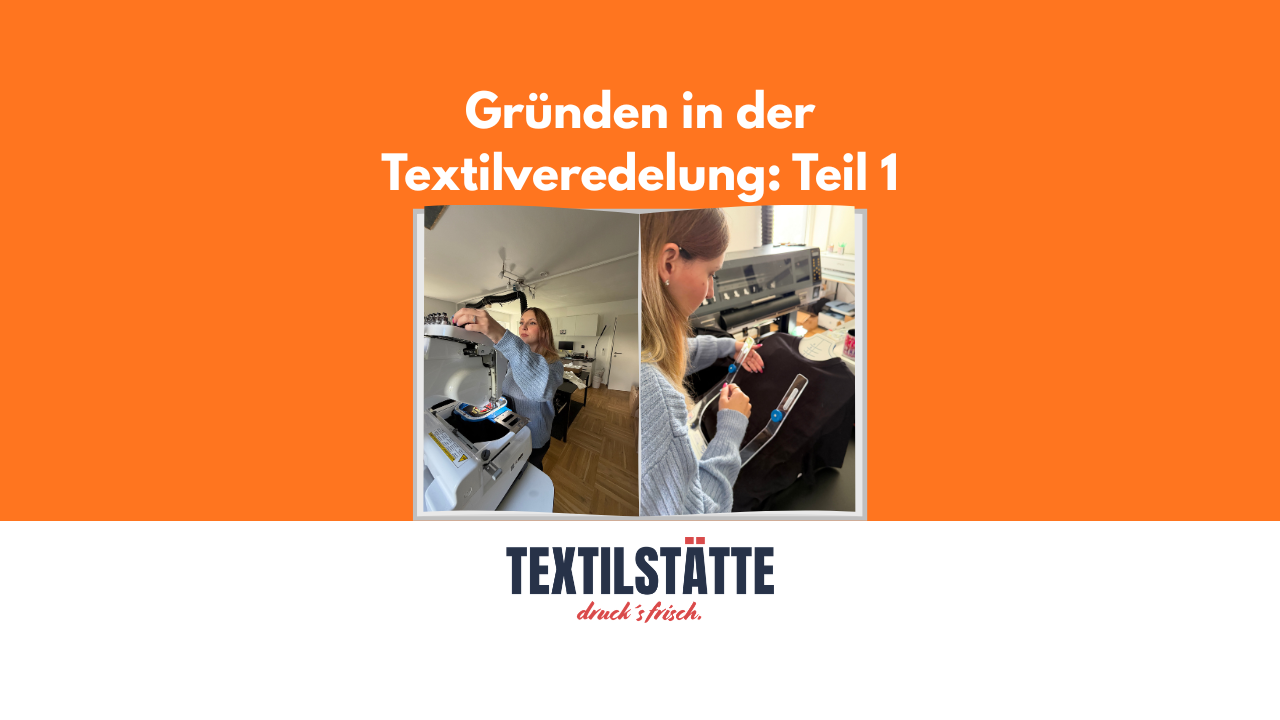
This article opens a new series on the emborado blog: Lara Uschakow shares the first steps of building a business in textile finishing. On laricari.studio, she documents her path into self-employment, the decisions behind it, the lessons learned and the things that do not work perfectly on the first try.
In this first part, I want to talk about a decision that opened a new chapter for my business: getting started with embroidery.
Why embroidery was the next logical step for me
I did not enter textile finishing from zero. Through my company Textilstätte, I already work with DTF printing, sublimation and vinyl cutting. These processes make many individual textile products possible. Still, I had felt for a while that an important piece was missing.
Embroidery brings a different sense of value. An embroidered logo on workwear, a premium detail on a hoodie or a design on a cap feels different from a print. It feels durable, professional and very connected to the product itself. That made it exciting for the next stage of our offer.
When you start or grow a textile finishing business, I do not think the goal should simply be to offer as many techniques as possible. The more important question is which technique fits your customers and your positioning. For us, embroidery is especially interesting for:
- company clothing and teamwear
- high-quality merchandise
- caps, hoodies and sturdy textiles
- products where texture and durability matter
I did not want to say only: “We offer embroidery now.” I wanted to understand what good embroidery quality is built on and how this new area could fit cleanly into our workflows.
Getting started was bigger than “buy a machine and begin”
At the beginning, it honestly felt a little overwhelming. I already had experience with printing processes. With embroidery, you quickly notice how many factors meet at once: thread, fabric, needles, stabilizer, hoops, file preparation, machine and software.
That is why I intentionally chose an in-person consultation at Nähpark. I had no prior experience with embroidery machines, and I did not want to make the decision from a specification sheet alone.
If you want to enter commercial embroidery, I think these questions should be part of the machine decision early on:
- Which textiles do you actually want to embroider?
- Which design sizes and placements will realistically come up?
- How many colours should be comfortable in daily production?
- Which additional tools and materials will you need, such as hoops, threads, stabilizers and needles?
- How will embroidery files be prepared, tested, stored and found again later?
These questions helped me look beyond the machine itself. The investment is not only the device. It also changes the workflow inside the business.
Why I chose the Brother PR680W
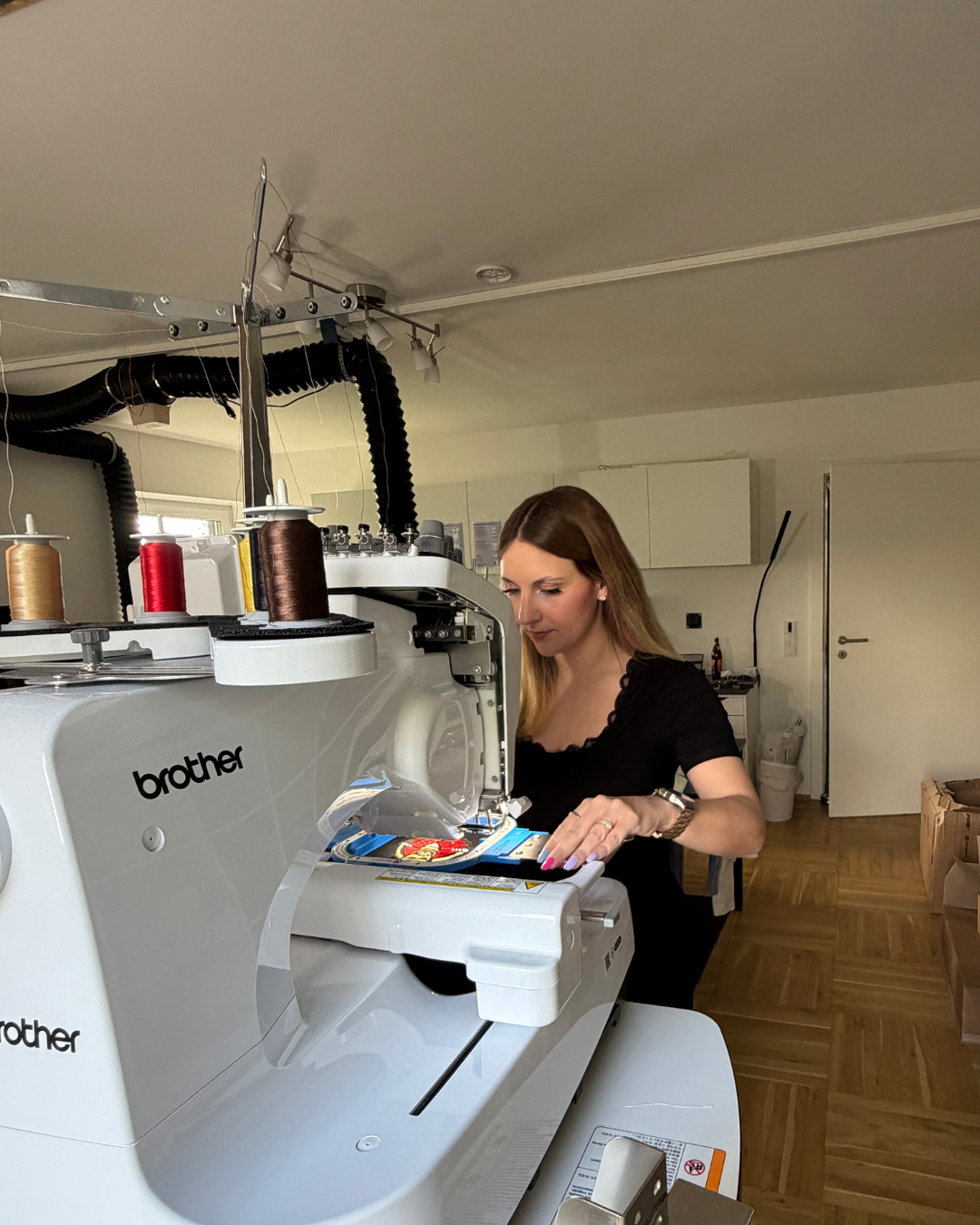
I chose the Brother PR680W. For me, it is a strong entry into a more professional embroidery setup without immediately moving into a very large industrial machine.
The most important points for me were:
- multiple needles and more comfort with multi-colour designs
- a solid embroidery area
- approachable operation while learning
- the ability to embroider different textile products
- room to grow with the next steps of the business
Growth mattered a lot in this decision. When you build a business, you are constantly balancing what you need today with what you want to make possible tomorrow. I wanted a solution that lets me learn without becoming too small as soon as customer projects become more demanding.
Software is part of the decision from day one
One lesson arrived quickly: an embroidery file is not a print file. In printing, it can be easier to think of the design and the production step separately. In embroidery, the file is much more directly connected to the material, stitch structure and final result.
That is why I also work with PE-Design 11. While setting everything up, it became clear that embroidery is not just loading a design and pressing start. You need to understand how thread, fabric and machine work together. A file that runs well on one material can raise new questions on another textile.
For founders in textile finishing, these were some of my most important early lessons:
- The machine is only one part of the system.
- Material tests are part of building quality.
- Embroidery software and file preparation are not side topics.
- Clear documentation saves time, questions and failed attempts later.
Build processes early, before disorder builds itself
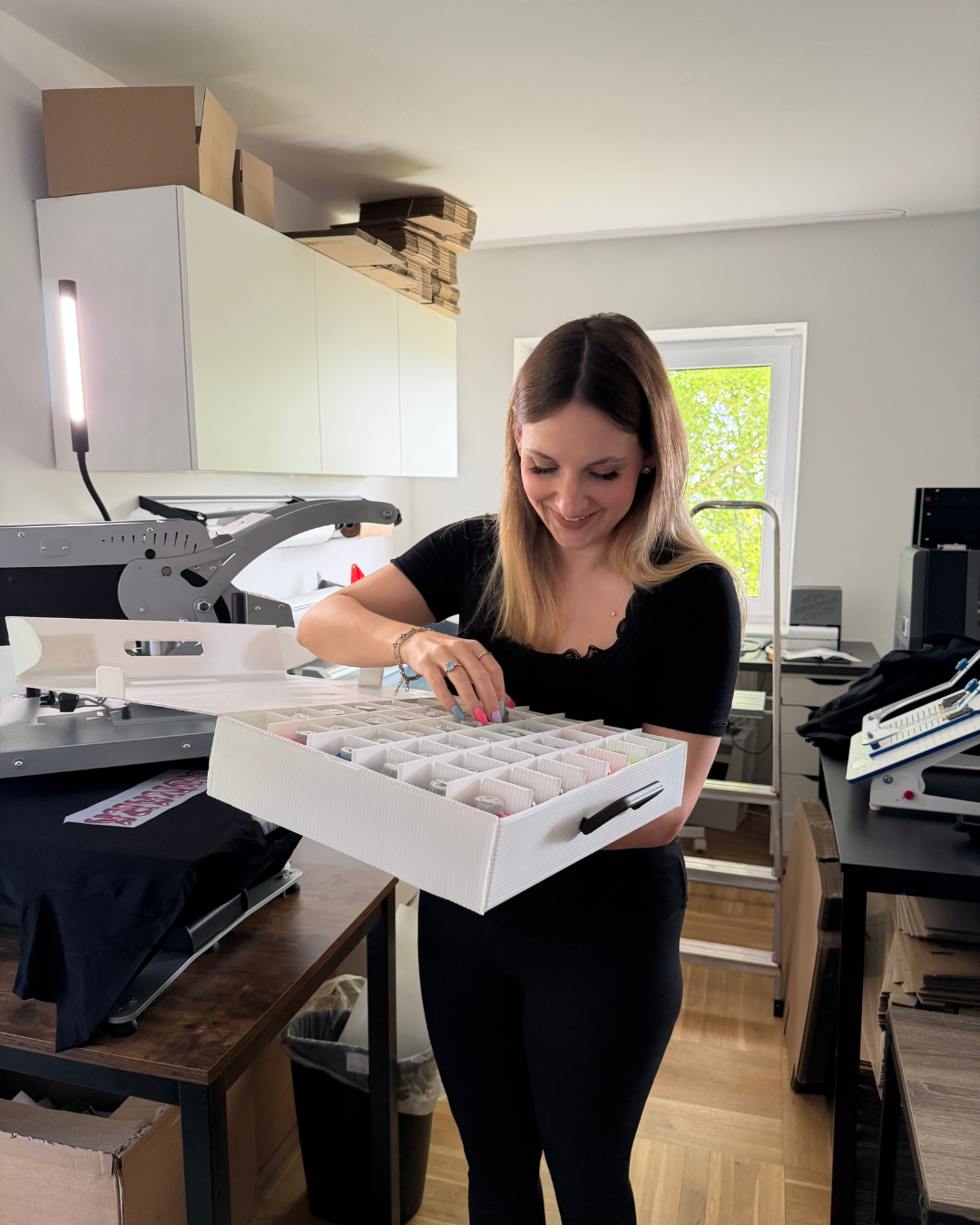
I know this from my first phase in business: once new orders, motifs, versions and notes start coming in, things can become messy quickly. With embroidery, I wanted a clean way to store and organize files from the beginning.
That is where emborado fits into the setup for me. When embroidery files are stored centrally, additional information sits with the design and team members can find their way around quickly, file storage becomes a real workflow component.
That matters especially with growth in mind:
- Everyone works with one consistent solution.
- Important information does not stay hidden in separate folders or individual memories.
- Designs can be found faster.
- Repeat orders become easier to trace and reproduce.
When you start a textile finishing business, machines, materials and first orders naturally take a lot of attention. They should. But the earlier you design your processes intentionally, the less you have to untangle later.
My takeaway from the first steps
Getting started with embroidery feels like reaching a new level in my business. It is more technical, more hands-on and more organizationally demanding than I could fully see before the consultation. That is also what motivates me.
I want to learn what makes embroidery quality genuinely good, how different materials behave and how a new service becomes a reliable part of our business. So if you are thinking about starting or expanding a textile finishing business, my first advice would be: Do not plan only the purchase. Plan your learning curve and your processes too.
In the next parts of this series, I want to keep sharing what really happens along the way: first tests, mistakes, decisions and the steps from a new machine corner to an offer that works in daily operations.
About Lara, laricari.studio and Textilstätte
Under the name laricari.studio, I document my path into self-employment and the growth of my textile and merchandise business. The content is not only about textiles. It is also about entrepreneurship, everyday self-employed life, decisions, learnings, failed attempts and the process of building something of your own step by step.
I offer my services through Textilstätte. Together with my partner, I create individual textile finishing solutions including DTF printing, embroidery, sublimation and vinyl cutting. We also build fulfillment and shop systems for creators, brands and companies that want a professional web presence with a shop. From technical implementation and production to order handling and shipping, we support the full process.
Want to follow Lara’s journey?
- laricari.studio on Instagram, TikTok and YouTube
- Textilstätte on Instagram and at textilstaette.de
- Send an inquiry to anfragen@textilstaette.de or call +49 151 65915434